Showing posts with label environmental. Show all posts

3 Oct 2011

Walled garden's awakening

Sometimes people in social enterprise slip into detachment from reality behind their LCD screens as easily as their business-as-usual colleagues. When we start to confuse social impact metrics for real people, or carbon credits for, well, anything real, it is probably the time. It is the right time to get ourselves out of our offices and to dive into some offline, hands-on, local engagement experience. Luckily there is no shortage of opportunities.


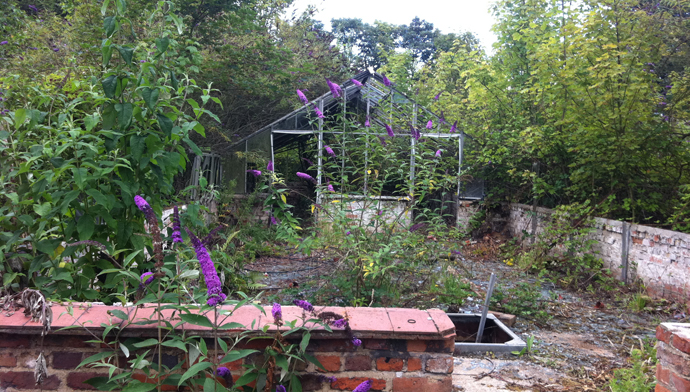
Less than two weeks ago on a beautiful Sunday morning, I found myself amidst a gang of volunteering 'Garden Angels' in eastern London. The sun was shining, people were getting dirty and excited, and one walled garden was slowly awaking from its long slumber, sending ripples to the whole neighbourhood.


The garden, the people, and the whole project were an unusual mix, aiming to go far beyond just planting a patch of lettuce. Their aim was to recreate a meaning for the old place within the context of contemporary communities. Pulling together an award-winning singer
Imogen Heap, design thinking and micro-urbanism expertise of Clear Village, a bunch of excited volunteers from all over the world, and committed local partners, it was a collaborative effort to inspire local communities. To inspire locals by retelling the forgotten tale of a vast, magnificent, Georgian kitchen garden lying hidden within its four-meter walls amidst a beautiful park on a hill overseeing London. A tale about a garden that used to serve those in a dire need as a food source of last resort, before it was shut down. A garden that was vandalised and erased from memories of common folk of that area.


This project by Clear Village saw the garden re-inhabited for a week, showed a glimpse of the garden's potential, and teased the locals with some thought-provoking questions: Should an enchanting place of such a deep soul and history stay neglected? Can it be helped to a grow into a new meaning in the 21st century? Can we find new invigorating modes of coexistence between the garden and the humans? Could it become a refuge, an organic food site, a place of gathering, a place of peace and joy? What effort and commitment would that require?


Such questions are not unique to this walled garden project, and they capture a lot of what a social enterprise is about in my eyes -- real communities and their places -- that is where social enterprise happens. And those of us whose sense of reality is too often endangered by an office space should get out from time to time to projects like this one to stay in touch.

26 Aug 2011

Peter's Blog Post for Business Fights Poverty

Peter Babudu, one of this year's On Purpose Associates, talks about how Start!e will directly address one of the major challenges that impact investors currently face: finding investment-ready social enterprises. Start!e has been set up as an incubator to facilitate the rapid creation of social businesses that protect the environment and reduce poverty, accelerating qualified and viable ideas from conception through financing to sustainable operation. Check out his post for Business Fights Poverty here.

29 Jul 2011

Finding Inspiration at Embercombe

This past weekend Tom and the Associates ventured to Embercombe, a social enterprise and valley in Devon that inspires individuals to take action to help build a socially just and environmentally sustainable world.

The weekend served as a pause for reflection as we begin our second placement of the year. In a few short days we experienced firsthand what sustainable living can look and feel like, and through conversations and individual self-exploration we discovered more about who we want to be as individuals and how we want to contribute toward shaping our future world.


At least a few of us were skeptical of what we assumed would be a weekend filled with trust falls and similar ‘team building’ exercises. Instead we found rejuvenation and renewed motivation through activities like woodworking, gardening, campfire story-telling (and rapping!), people planting (a bit hard to explain…), even playing on swings and monkey bars. Oh and do remember to ask when you next see one of us how to play ‘Zip, Zap, Boing.’


Every moment at Embercombe somehow led us to learn more about ourselves and about each other. Who knew- Peter can really rap, Dom's into Flamenco, Dalibor's an excellent woodworker. Through an exhausting yet immensely insightful feedback circle on our last morning, we shared with each other what we we respect about each other, what we perceive our strengths to be, and how we might improve upon those strengths.


Perhaps the most important lesson was that being an effective leader is not about telling others what to do, project management, or delegation. And as Liam Black noted earlier this week, it’s not about being the saviour, the tyrant, or the ‘I can do it all’ superhero. Instead, being an effective leader is about being yourself and using your personal style and strengths to move and inspire others. Strong leaders are genuine. They live the transformational change they hope to spark. They make their motivations transparent. They empathise with those they’re leading. They inspire as much by doing as by giving others space to do and grow.


The list could go on and on, but we challenge you to discover for yourself the rest. Come Sunday afternoon we were all reluctant to leave our yurts and to say goodbye to the breathtaking valley views and the amazing home-grown and home-cooked meals. We'll definitely be going back, and we'd urge you to go whenever you get a chance too. We promise that you'll be welcomed with open arms and a warm pot of lovingly cooked lentils.

28 Apr 2011

Cut the fluff and climb

Seeing a well established, NASDAQ-quoted carpet manufacturer on the list of On Purpose placements, one might be forgiven for asking if On Purpose has any clue what social enterprise is about. Yet after taking a closer look, the person could be shocked again to find out that there really are examples of corporations that are serious about placing “doing good” at the centre of their core business.

Since the early 1990's Interface, the carpet manufacturer, has been climbing Mount Sustainability. Long before green wash tide flooded billboards and annual reports, Interface launched its expedition to reach zero negative impact on the environment by 2020. And as the slopes became steeper closer to the summit, they started realising that there was a social element, too, and it would have an important part to play in getting to the sustainable top.

Working for InterfaceFLOR on innovations around social sustainability has been a great learning experience. It is refreshing to see a profit maximising corporation of a decent size and age being dead serious about its mission to become fully sustainable; to experience the culture of the mission, starting with visionary leadership and cascading down to the very bottom; to hear the chairman always focusing his speech on the long-term mission and to find out that almost every single employee has a clear opinion of what it is about and is proud to be part of it. Sounds nice, but still a bit old school, top-down way of steering things? Sure, that's the legacy. But Interface is slowly finding its way towards greater participation by employees and the general public as well. It understands its culture must become open and inclusive if its mission is not to be a joke.

The credibility of the culture is only reinforced by the company's strong push towards transparency and measuring impact, or, as their marketing department would say, “Cut the fluff” and show the product life cycle data. But it is not just the product impact data that they try to make transparent. Their reporting on their progress towards the 2020 mission might make some charities feel ashamed. So, has Interface found the holy grail of social enterprise: earning healthy profits by focusing on “mission first”? Well, no.

Interface comes from the profit making side of the line, and profit needs to be sustained. They are working hard to find the points of synergy where mission and profit reinforce each other, but it is tough and no one really knows how it actually works. In practice it means that whenever a new project proposal is assessed, there is a question about how it delivers on each of the two dimensions. And often it costs extra time and investment. Yet somehow, the money and effort spent on the mission seems to be coming back - in the good will of people and stakeholders, in employees' loyalty, and in the end in sales.

Interface has no doubt a long and tough climb ahead of them, and there might be only few in the expedition with a clear vision of the summit and beyond. Yet there is one achievement none can take away from them. However half blind, clumsy, and exhausted they might appear on the slope of Mount Sustainability, they have pulled up with them whole industries quite some way up from the lowlands of indiscriminate destruction. No, Interface is not a poster child of a social enterprise, but it is an example inspiring confidence that some corporations might actually become one day genuinely restorative to their human societies and more-than-human ecosystems. And that is what social enterprise should be about, isn't it?

30 Mar 2011

The Barefoot Revolution

By Dominic Jones

Terra Plana uses innovative approaches to create “sustainable” shoes. Creating sustainability in manufacturing is often thought of as minimizing the “footprint” of production (if you have an aversion to cheap puns you should probably stop reading). The focus has increasingly shifted to include the function and use of products and a more holistic picture of the full life cycle of the shoe.

I was excited to work with Terra Plana when I heard that they produced “barefoot shoes” (I love an oxymoron). These are patented ultra thin and flexible shoes that allow the foot to feel and move as if it were bare. As a physiology student my snake oil senses were initially aroused, but the further I’ve delved into the concept the more I’m convinced that it is in fact an elegant solution to a genuine problem and has far reaching potential for positive change.

The development of the VIVOBAREFOOT concept is an interesting one. I won’t go into the history, but for those of you interested you can read the full story
here. VIVOBAREFOOT has evolved from being a range of Terra Plana to a brand in it’s own right. In fact the company sells more of these shoes now than any other and is in the process of launching the first VIVOBAREFOOT concept store.

A number of events have helped to spread the popularity of barefoot shoes, but without a doubt the largest must be “Born to Run”, a book written by Chris McDougall. There’s a great TED talk by McDougall
here that explains why humans were born to run, barefoot. This was followed by groundbreaking research on running in habitually barefoot populations from Havard University, published in the journal Nature.

Part of my remit at Terra Plana has been to help develop and spread a clearer understanding of the science behind VIVOBAREFOOT and barefoot running. The latest project has been the release of an
eBook written by Lee Saxby, VIVOBAREFOOT’s resident biomechanical expert.


Lee’s message is simple: running is a skill, and all running injuries are due to a lack of skill. What this means is that due to the forces involved when running, around 2 times body weight on a single leg, you must make sure your form allows for the correct distribution of these forces. Running barefoot allows you to improve your running skill by connecting you to your proprioceptive sense (proprioception is the body’s awareness of the forces acting on it, felt, for example, primarily in the feet whilst running).

What is especially interesting is the size of the prize. Running in the UK is the third most popular sport with around 1.8m participants and some of the highest annual growth rates. Estimates vary but put the number of runners injured each year at up to 80%. I therefore encourage you to have a look and pass on to any runners you know. Engaged debate supported by robust and independent science is the testbed of all radical new ideas!

http://www.vivobarefoot.com/uk/


31 Jul 2010

ESG investing - what else is going on out there?

Every now and again I am reminded the the social enterprise world is not the only movement looking for ways of combining social and environmental achievements with commercial goals. CSR (or CR or sustainability as it is now more often known as) and social intrapreneurship are examples of related movements that have realted aspirations. Social finance or impact investing is also increasingly gaining in prominence.

Further back in the public's consciousness lies the land of Environmental, Social and Governance (ESG) Investing. It is populated by asset managers, bankers, private equity investors and pension funds, who wield influence behind the scenes, through the often substantial sums they can invest (or not). Whilst many of these investments still happen with a need for (near) commercial returns, ESG considerations are making more and more of a mark.

This November, London will be the backdrop for the TBLI Conference, a major annual conference in this field. Encouragingly, the conference includes a session on social entrepreneurs and social investing and On Purpose plans to be a part of it.

These different movements, which are all working to achieve social and environmental outcomes through commercial means, will need to come together more and more if serious system-level change is to happen.

Tom